
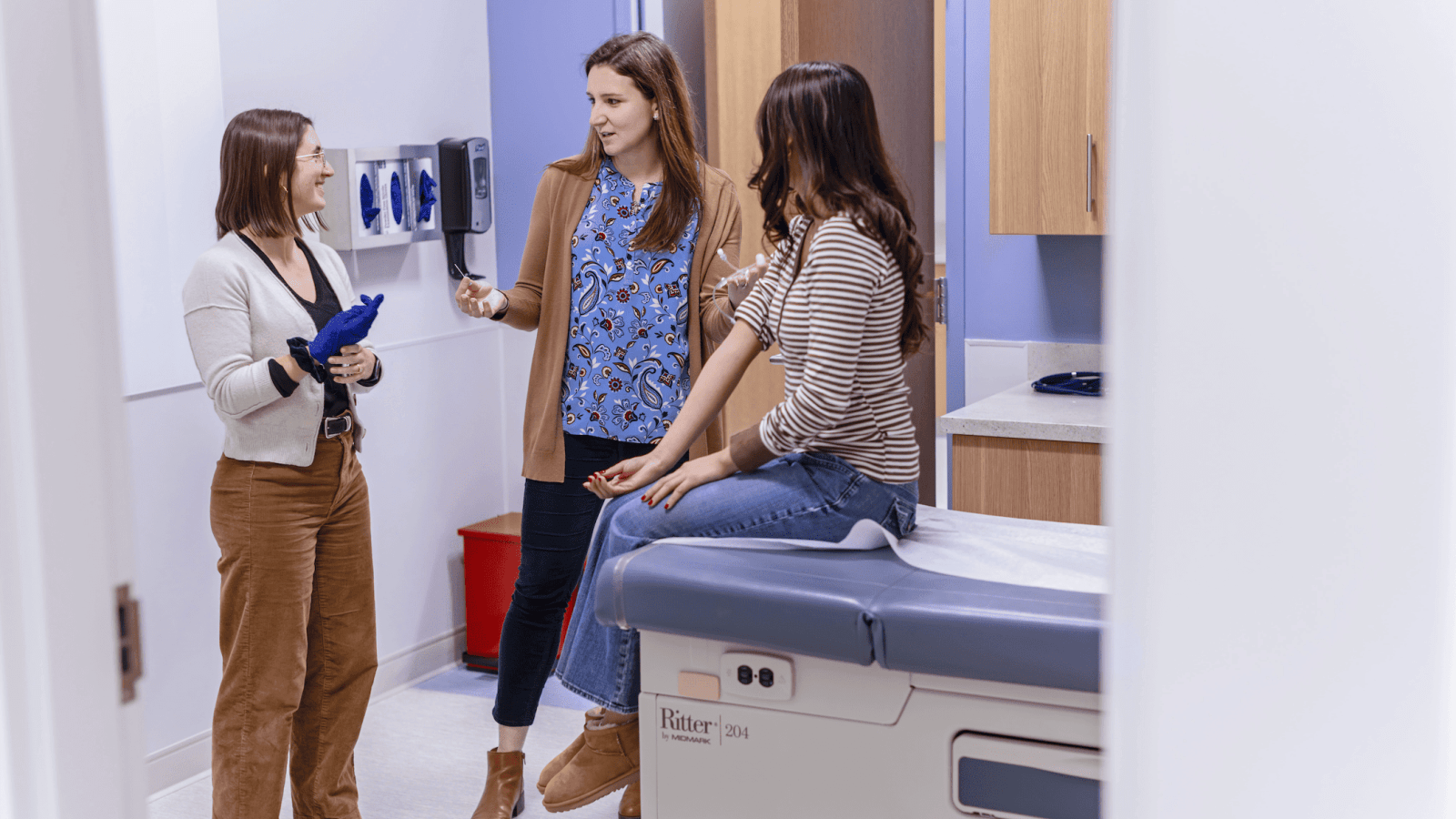
Clinical judgment is not taught in a single course. It is built, layer by layer, across four years of deliberate practice.
Why is Clinical Judgment Now the Defining Skill in Nursing Education?
Nursing education is undergoing one of its most significant transformations in decades. In April 2023, the National Council of State Boards of Nursing (NCSBN) launched the Next Generation NCLEX (NGN). This updated licensing examination moves beyond multiple-choice fact recall and directly measures a candidate’s ability to exercise clinical judgment. For students choosing a BSN program today, this shift changes everything: from the coursework they should expect, to how simulation fits into their preparation, to what it really means to be ready for practice.
If you are weighing your undergraduate nursing options, understanding how a program builds clinical judgment, not just covers content, is one of the most important questions you can ask. At the Conway School of Nursing at The Catholic University of America, the traditional four-year BSN program is structured to develop clinical judgment progressively, from the first semester through the final capstone.
ANSWER BOX
How does a BSN nursing program teach clinical judgment?
A BSN program teaches clinical judgment by progressively building students’ ability to recognize cues, analyze data, and prioritize nursing actions across four years of coursework, simulation, and clinical experience. The NCSBN Clinical Judgment Measurement Model provides the framework. Hands-on simulation with tools such as SimMan and VitalSim enables Conway School of Nursing students to practice judgment-based decision-making in safe, controlled environments before entering patient care.

What Is Clinical Judgment in Nursing and Why Does It Matter?
Clinical judgment refers to the cognitive process a nurse uses to observe a patient, recognize clinically significant cues, make sense of available data, decide on a course of action, carry out that action, and evaluate whether it worked. It is iterative, context-dependent, and patient-specific.
The NCSBN Clinical Judgment Measurement Model (NCJMM) defines this process as six interconnected cognitive layers:
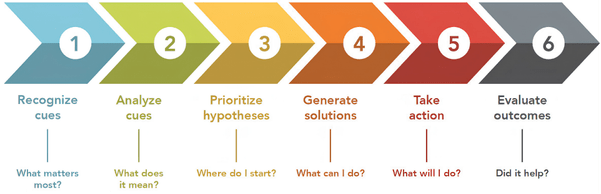
- Recognize Cues — identify what is clinically relevant from the patient’s presentation
- Analyze Cues — determine what the data means in relation to the patient’s condition
- Prioritize Hypotheses — decide which explanations are most likely or most urgent
- Generate Solutions — identify potential interventions and evaluate their appropriateness
- Take Action — implement the highest-priority solution
- Evaluate Outcomes — determine whether the patient responded as expected and revise care accordingly
These six cognitive skills form the backbone of the NGN examination format, which uses scenario-based question types, extended drag-and-drop, highlight, and matrix items, to assess whether candidates can think like nurses, not just recall information.
Key Takeaway: The NCSBN Clinical Judgment Measurement Model is the shared framework behind both the Next Generation NCLEX and rigorous BSN curriculum design. Conway School of Nursing students benefit from programs that embed all six NCJMM layers throughout four years.
How Does the Conway BSN Program Build Clinical Judgment Across Four Years?
The Traditional BSN program at the Conway School of Nursing requires a minimum of 123 credits and spans four academic years. Rather than reserving clinical judgment training for a final-semester review, the program is designed so that each year adds a deliberate new layer of complexity.
| Year | Focus | Key Courses | Clinical Judgment Skill Built |
|---|---|---|---|
| Year 1 | Foundations & Sciences | NURS 151, A&P, Microbiology | Health systems literacy; professional role identity; foundational pattern recognition |
| Year 2 | Assessment & Pathophysiology | NURS 258, NURS 309, NURS 310 | Health assessment skills; pharmacological reasoning; fundamental clinical decision-making |
| Year 3 | Clinical Integration | NURS 275L/C, NURS 376L/C | Applying judgment to adult patients; recognizing changing conditions; prioritizing care |
| Year 4 | Advanced Application & Transition | NURS 430L/C, NURS 427, NURS 480 | Complex clinical scenarios; leadership in care; readiness for Next Generation NCLEX |
This scaffolded progression means that, by the time a student enters Year 3 clinical rotations, the foundational reasoning skills are already in place. The clinical environment becomes a setting for applying and refining judgment—not learning it from scratch. Learn more about the Traditional BSN program
How Does Each Course in the Conway BSN Curriculum Reinforce Clinical Judgment?
Every required nursing course in the Conway BSN program contributes to clinical judgment development in a distinct and intentional way. The following overview traces that development from the first semester to the final capstone:
- NURS 151 — Introduction to Health Systems and Professions: Establishes the professional and conceptual context for nursing judgment. Students examine how health systems operate, the nurse’s role within those systems, and the ethical frameworks that guide clinical decision-making. This early orientation establishes pattern-recognition habits around professional responsibility.
- NURS 258 — Health Assessment (Lecture and Lab): Systematic health assessment is the source of the cues that clinical judgment depends on. Students learn to perform comprehensive physical, functional, and psychosocial assessments. Lab practice builds the perceptual skills, such as auscultating breath sounds, palpating lymph nodes, identifying skin changes, that become the raw material for clinical reasoning.
- NURS 309 — Fundamentals of Nursing (Lecture and Lab): Introduces the nursing process as a clinical judgment tool. Core skills, including wound care, vital signs, infection control, medication administration, are practiced in a lab environment where students begin connecting technique to reasoning: not just how to perform a skill, but when and why.
- NURS 310 — Pharmacology: Pharmacological reasoning is one of the most frequent points at which clinical judgment errors occur. This course trains students to evaluate drug indications, contraindications, interactions, and patient-specific factors. It applies directly to the NCJMM’s Analyze Cues and Generate Solutions layers.
- NURS 275L/C — Adults in Health and Illness I: The first of three adult health courses marks the transition into supervised clinical practice. Students encounter patients with acute and chronic conditions, applying assessment and pharmacological knowledge to real-world situations while supervised by clinical faculty.
- NURS 376L/C — Adults in Health and Illness II: Complexity increases as students manage patients with multiple comorbidities. The emphasis shifts toward prioritization, where students learn to identify which of several pressing clinical needs should be addressed first. This training directly addresses the Prioritize Hypotheses and Take Action layers of the NCJMM.
- NURS 430L/C — Adults in Health and Illness III: The most clinically demanding adult health course introduces acute deterioration, complex surgical care, and multi-system failure scenarios. Students integrate all prior clinical judgment skills and demonstrate the ability to act independently under supervision.
- NURS 427 — Transitions to Professional Practice: Bridges the gap between student and professional nurse, addressing delegation, interprofessional communication, ethical dilemmas, and the evolving healthcare landscape. Students apply clinical judgment in the context of leadership and care coordination.
- NURS 480 — Strategies for Professional Practice: The capstone course integrates clinical judgment, evidence-based practice, and professional identity into a summative experience. Students synthesize four years of coursework and clinical practice and learn to demonstrate readiness for entry-level professional nursing.
How Does Conway’s Simulation Center Accelerate Clinical Judgment Development?
Simulation-based education is one of the most evidence-supported instructional methods for developing clinical judgment in nursing students. The Conway School’s dedicated simulation-based education program operates within a new, state-of-the-art, purpose-built facility, offering students repeated exposure to high-fidelity patient scenarios before they ever enter an actual clinical setting.
What Equipment Does Conway’s Simulation Center Use?
The Simulation Center uses the following high-fidelity and task-training equipment:
- SimMan Simulator — a full-body adult mannequin that replicates physiological responses including breathing, circulation changes, and clinical deterioration
- SimBaby Simulator — a high-fidelity infant simulator for pediatric clinical judgment scenarios
- VitalSim Adult, VitalSim Toddler, VitalSim Baby — vital-sign simulation mannequins spanning the lifespan
- IV Task Trainer — IV management skills, including practicing vascular access skills with realistic tactile feedback, programming IV pumps, and calculating drip rates
- DVD Recording Equipment — captures simulation runs for structured debriefing and faculty-guided review
What Is the Physical Layout of the Conway Simulation and Skills Facilities?
The 10,891-square-foot Simulation Center on the second floor includes eight Acute Care rooms, (one configured as a simulated operating room) and six Primary Care Exam Rooms, each with a dedicated debriefing alcove. Seven Debriefing Rooms and a 420-square-foot recording studio support structured post-simulation review.The Nursing Skills Lab on the third-floor spans 5,803 square feet and includes two labs with 17 open practice bays (stretchers) and three enclosed bays (beds). The first floor includes a Microbiology Lab (1,317 sq ft, 24 seats) and Anatomy and Physiology Lab (1,477 sq ft, 24 seats).
How Does Simulation Connect to the NCSBN Clinical Judgment Measurement Model?
Each simulation scenario is designed to engage the six specific layers of the NCJMM. In a deteriorating post-surgical patient scenario, students must: (1) Recognize Cues (declining oxygen saturation), (2) Analyze Cues (possible respiratory depression), (3) Prioritize Hypotheses (airway compromise over wound pain), (4) Generate Solutions (oxygen delivery options, reversal agents), (5) Take Action (administer the intervention), and (6) Evaluate Outcomes (reassess saturation and mental status). Faculty-led debriefing immediately following each scenario allows students to articulate and refine their reasoning in real time. Learn more at Simulation.
How Does Developing Clinical Judgment Prepare Conway BSN Students for Practice?
The gap between nursing school and the realities of the clinical floor is one of the most discussed challenges in the profession. New graduate nurses consistently identify clinical decision-making under pressure, not technical skill deficiency, as their most significant early-career stressor. A curriculum designed to progressively build and test clinical judgment is designed to narrow that gap.
For Conway BSN students, the combination of simulation-based practice, supervised clinical rotations beginning in Year 3, and faculty-guided debriefing is designed to prepare students for careers in acute care hospital nursing, ambulatory and primary care settings, community and public health nursing, and graduate education or advanced practice roles. Students interested in graduate-level nursing may explore Conway’s MSN, DNP, and PhD programs.
How Does Clinical Judgment Appear in Real Nursing Practice Today?
In any given shift, a staff nurse may encounter a patient whose condition changes unexpectedly. Consider a patient recovering from abdominal surgery who develops a low-grade fever and an increasing heart rate. Is this normal post-operative inflammation or the early sign of a surgical site infection or sepsis? The answer determines whether the nurse monitors and documents, notifies the physician immediately, or initiates a rapid response call.
This scenario, which is common across medical-surgical units nationwide, is not resolved by recalling a fact. It is resolved by clinical judgment: synthesizing vital signs, surgical history, lab trends, the patient’s subjective report, and an understanding of sepsis pathophysiology; then acting on that synthesis within minutes. Professional nursing organizations and health systems have consistently identified this reasoning capacity as a core patient safety competency.
Conway’s BSN curriculum, aligned with the NCSBN Clinical Judgment Measurement Model and supported by high-fidelity simulation, is designed to prepare students to meet that standard. View clinical opportunities available to Conway students.
Explore the BSN Program at Conway School of Nursing
Bachelor of Science in Nursing (BSN)
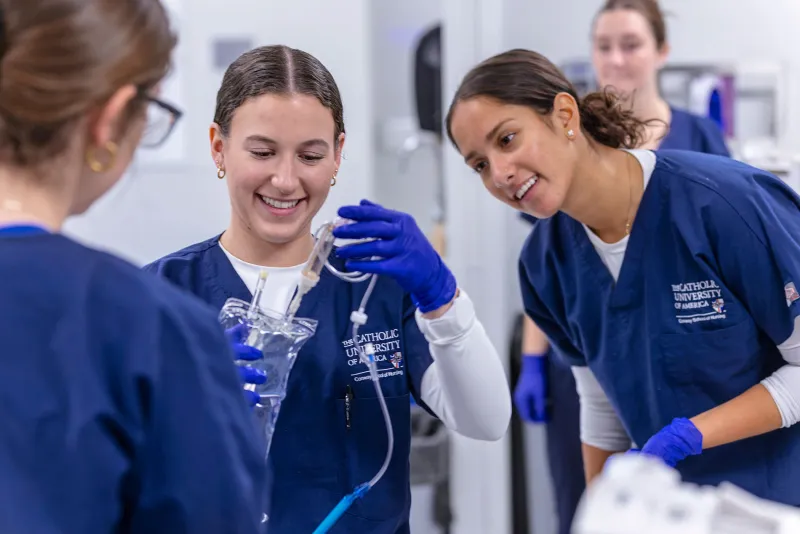
The Bachelor of Science in Nursing (BSN) is for undergraduate students who want to pursue a nursing career. It is a traditional, 4-year comprehensive program that blends coursework with clinical experience.
Accelerated Bachelor of Science in Nursing (ABSN)
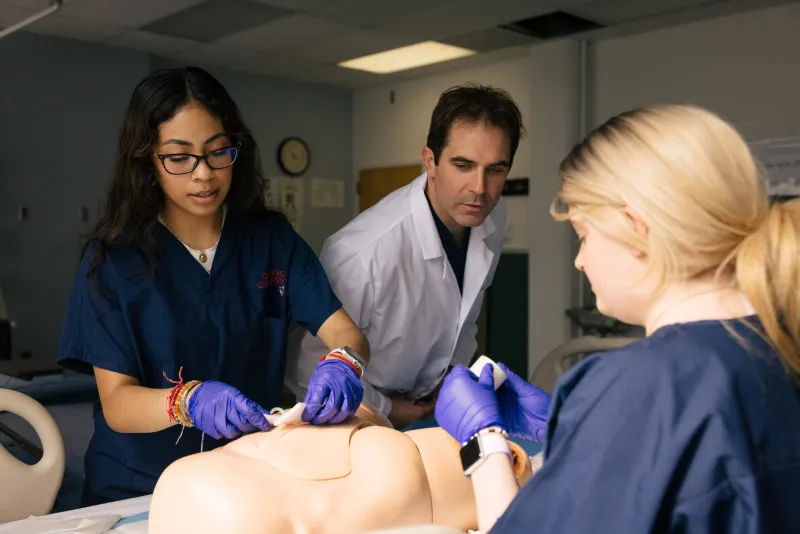
The Accelerated Bachelor of Science in Nursing (ABSN) is a 12-month, full-time program designed for individuals with a bachelor’s degree in a non-nursing field who are eager to transition into the nursing profession.
BSN Program at Conway School of Nursing
Ranked #28 Nationally by U.S. News & World Report • CCNE-Accredited • Washington, D.C.
Request Undergraduate Information
www.catholic.edu/admission-aid/undergraduate-admission/request-information
Apply Now
Accreditation: The baccalaureate degree program in nursing, the master’s degree program in nursing, the Doctor of Nursing Practice program and the post-graduate APRN certificate program at The Catholic University of America, Conway School of Nursing are accredited by the Commission on Collegiate Nursing Education (http://www.ccneaccreditation.org).
Students should verify current licensure requirements with their applicable Board of Nursing, as requirements vary by state and are subject to change.
Frequently Asked Questions About Clinical Judgment and the Conway BSN Program
What is clinical judgment in nursing?
Clinical judgment is the cognitive process a nurse uses to observe a patient’s condition, recognize significant cues, analyze available data, prioritize possible explanations, decide on a nursing action, implement it, and evaluate the result. The NCSBN Clinical Judgment Measurement Model formalizes this process into six measurable steps, which now form the basis of the Next Generation NCLEX examination.
Why does the Next Generation NCLEX matter for BSN students?
The Next Generation NCLEX (NGN), launched in April 2023, tests clinical judgment directly through scenario-based question formats, rather than relying solely on recall. BSN programs that embed clinical judgment development throughout the curriculum, like the Conway School of Nursing, are designed to prepare students more thoroughly for this updated examination format.
When do Conway BSN students begin clinical rotations?
Nursing-specific clinical coursework begins in Year 3 of the BSN Traditional program with NURS 275L/C Adults in Health and Illness I. Prior to that, students complete foundational sciences, health assessment, fundamentals of nursing, and pharmacology, coursework that provides the reasoning base required for safe clinical practice.
How does simulation lab practice relate to clinical judgment?
Simulation allows students to encounter realistic patient scenarios, practice cue recognition, and make nursing decisions without risk to an actual patient. Conway’s Simulation Center uses high-fidelity simulators including SimMan, SimBaby, and VitalSim models in acute and primary care environments.
Is the Conway BSN program CCNE-accredited?
Yes. The BSN program at The Catholic University of America Conway School of Nursing is accredited by the Commission on Collegiate Nursing Education (CCNE) at the baccalaureate level. Students should verify current licensure requirements with their applicable Board of Nursing, as requirements vary by state and are subject to change.
How does the Conway BSN curriculum address patient safety?
Patient safety is woven throughout the curriculum. Simulation scenarios mirror real clinical near-miss situations so students can learn to recognize and respond to deteriorating conditions. Debriefing rooms adjacent to simulation spaces allow faculty to review student decision-making immediately after each scenario, reinforcing safety-focused reasoning habits.
Can Conway BSN graduates continue to advanced nursing education?
Conway offers graduate pathways including MSN, DNP, and PhD programs. Students interested in advanced practice roles may explore options at nursing.catholic.edu/programs-admission/graduate-programs. The ABSN program for career-changers is also available at nursing.catholic.edu/programs-admission/bsn-programs/accelerated-bachelor-science-nursing-absn
Sources
1. National Council of State Boards of Nursing (NCSBN). NCSBN Clinical Judgment Measurement Model. https://www.nclex.com/clinical-judgment-measurement-model.page.
2. American Association of Colleges of Nursing (AACN). The Essentials: Core Competencies for Professional Nursing Education. https://www.aacnnursing.org/essentials.
3. National Council of State Boards of Nursing (NCSBN). Next Generation NCLEX Project. https://www.ncsbn.org/next-generation-nclex.htm.
4. U.S. News & World Report. Best Nursing Schools: Bachelor’s Rankings. https://www.usnews.com/best-colleges/rankings/nursing.
5. American Association of Colleges of Nursing (AACN). Simulation in Nursing Education White Paper. https://www.nursingworld.org/globalassets/organizational-programs/accreditation/ptap_appfa/2025-white-paper---simulation.pdf.
6. National Academies of Sciences, Engineering, and Medicine. The Future of Nursing 2020–2030: Charting a Path to Achieve Health Equity. https://www.ncbi.nlm.nih.gov/books/NBK573910/.